The 23 best US credit cards for
non-resident founders
Every roundup you have read ranks these cards for someone with an SSN
and a ten-year US credit file. You have neither. This one ranks them for
a founder with a US LLC, an EIN, an ITIN and an empty credit report, and
every card here lists the month you can realistically be approved for it
rather than a credit score you cannot see. The business tab opens first
because that is where the spend goes, but the first card you actually
apply for is a personal secured one — flip the toggle for the personal
side.
Credit cardsLast updated: September 2026By Valentin, Founders Credit13 business · 10 personal
Offers move — check before you apply
Welcome offers, annual fees and earning caps change constantly, and
several of the cards below are mid-refresh. Every figure on this
page was checked against the issuer's own published terms in
September 2026. Treat it as a starting point for comparison, not as
the application page, and confirm the current terms with the issuer
before you apply.
Business cards come first for a reason: they are underwritten against
your LLC as well as you, so a non-resident is usually approved for one
six to twelve months earlier than for the personal equivalent.
5.0/ 5
Best overall
Chase Sapphire Reserve for Business
Welcome offer
200,000 pointsafter $30k in 6 months · ~$4,000
Annual fee
$795
Headline rate
3x on ads, no cap8x via Chase Travel · 4x flights & hotels direct
Realistic approval
Month 18+from the day your first card reports
Foreign fee
None
What it earns, in full
8xon everything booked through Chase Travel, including The
Edit hotels
5xon Lyft rides, through September 30, 2027
4xon flights and hotels booked directly with the airline or
hotel
3xon social media and search engine advertising
1xon everything else
No caps on any tier, so the 3x on ads keeps going past the
$150,000 a year where Ink Preferred and Amex Business Gold drop
to 1x. Spend $120,000 in a calendar year and it adds IHG Diamond Elite,
Hyatt Explorist and Southwest A-List status on top.
Why we picked it. The only card on this page that still
pays 3x on ads after the first $150,000, and it comes with Sapphire
lounge access and the same Ultimate Rewards transfer partners as
the Ink line. Most of the $795 fee comes back through credits that
work from anywhere: $300 of travel, $500 at The Edit hotels and
$200 of Google Workspace. The Lyft, DoorDash and ZipRecruiter
credits only pay if you have a US base. Once ads run past $12,500
a month, no other card here keeps earning like this one.
Pros and cons
Pros
3x on social and search ads with no cap, the only
uncapped ad rate here
200,000-point welcome offer, worth roughly $4,000 in
transfers
Chase Sapphire Lounges plus 1,300+ Priority Pass lounges,
with two guests
$300 travel, $500 The Edit and $200 Google Workspace
credits each year
Cons
$795 a year, the highest business fee on this page
$30,000 of spend in six months to earn the offer
Chase underwriting and 5/24 put it at month 18 or later
The Lyft, DoorDash and ZipRecruiter credits are hard to use
from outside the US
4.9/ 5
Best for ad spend
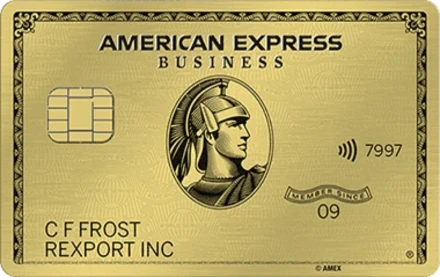
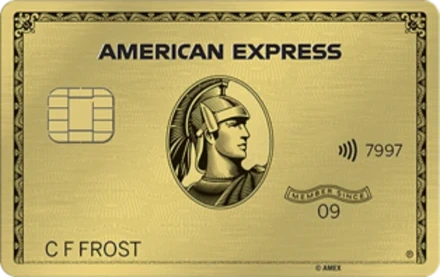
Amex Business Gold
Welcome offer
100k–150k pointsafter $15k in 3 months · ~$2,000–$3,000
Annual fee
$375
Headline rate
4x on your top 2 of 6 categoriesdigital advertising included · $150,000/yr cap
Realistic approval
Month 12+from the day your first card reports
Foreign fee
None
What it earns, in full
4xon the two categories you spend most in each billing cycle,
chosen automatically from six: US advertising in select
media, US software and cloud, US gas stations, US
restaurants, transit, and US electronics retailers
3xon flights and prepaid hotels booked through
amextravel.com
1xon everything else
4x runs to $150,000 of combined eligible purchases per calendar
year, then 1x. That covers $12,500 a month of ad spend.
Why we picked it. 4x on digital advertising is the highest
multiplier any issuer will put in a non-resident founder's hands,
and the $150,000 annual cap covers up to $12,500 a month of ad
spend. On $120,000 of yearly Meta and Google spend that is 480,000
points, worth roughly $9,600 through transfer partners against a
$375 fee.
Pros and cons
Pros
4x on the two categories you spend most in each month,
chosen automatically
Digital advertising is one of the six eligible categories
$150,000 annual 4x cap covers most founders' entire ad
budget
Membership Rewards transfer to Flying Blue, ANA, Avios and
LifeMiles
Cons
$375 fee needs roughly $2,500/mo of 4x spend to break even
Everything above the $150,000 cap drops to 1x
Amex's lifetime bonus rule gives you one attempt at the
welcome offer
Charge card — the balance must be paid in full every month
4.8/ 5
Best value
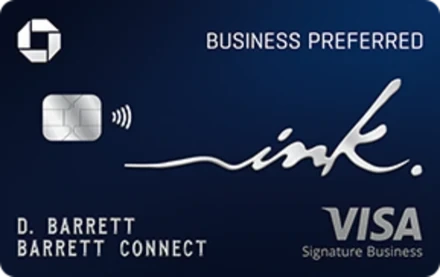
Chase Ink Business Preferred
Welcome offer
100,000 pointsafter $8k in 3 months · ~$2,000
Annual fee
$95
Headline rate
3x on ads, travel & shippingfirst $150,000/yr, then 1x
Realistic approval
Month 12–18from the day your first card reports
Foreign fee
None
What it earns, in full
3xon travel, shipping, internet/cable/phone, and advertising
bought with search engines and social media
1xon everything else, and on all spend above the cap
+25%more value when points are redeemed for travel through
Chase Travel
The 3x categories share one $150,000 cap per account anniversary
year — about $12,500 a month before you drop to 1x.
Why we picked it. A $2,000 welcome offer on a $95 annual
fee is the best fee-to-value ratio any issuer offers a founder,
and Ultimate Rewards transfer to United, Aeroplan, Flying Blue and
Hyatt — the exact programs that turn EU-to-Americas business class
into 60,000 points one-way. If you only ever hold one paid card,
hold this one.
Pros and cons
Pros
$2,000 of value on a $95 fee — nothing else here comes
close
3x on online ads, travel, shipping and internet on the
first $150,000 a year
Points transfer to United, Aeroplan, Flying Blue, Avios
and Hyatt
25% redemption bonus through Chase Travel on top of
transfers
Cons
Chase is the strictest underwriter for a thin or foreign
file
5/24 blocks you outright if you opened five personal cards
in 24 months
No lounge access and no travel credits
Realistically a month 12–18 card, not a starter
4.7/ 5
Best no annual fee
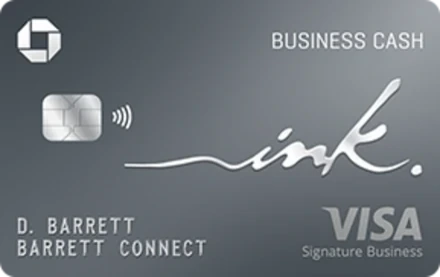
Chase Ink Business Cash
Welcome offer
$750 cash backafter $6k in 3 months
Annual fee
$0
Headline rate
5% on office supplies & internet/phonefirst $25,000/yr · 2% gas & dining · 1% else
Realistic approval
Month 9–12from the day your first card reports
Foreign fee
3%on every non-USD charge
What it earns, in full
5%at office supply stores and on internet, cable and phone
services
2%at gas stations and restaurants
1%on everything else, and above both caps
The 5% categories cap at $25,000 per anniversary year and the 2%
categories at another $25,000, each resetting annually.
Why we picked it. A $750 welcome offer with no annual fee,
on top of 5% back on the software, internet and phone bills every
founder already pays. If you also hold Ink Preferred, the cash
back converts into transferable Ultimate Rewards — which is how a
$0-fee card ends up funding business class.
Pros and cons
Pros
$750 welcome offer on a card that costs nothing to keep
5% back on internet, phone and office supplies up to
$25,000 a year
Points become fully transferable if paired with an Ink
Preferred
Keep it open forever — it quietly ages your credit file
Cons
Chase wants 6–12 months of clean US history before it
approves
5/24 will auto-deny you if you applied elsewhere first
5% category caps at $25,000 a year
1% on everything outside the bonus categories
4.6/ 5
Best beginner travel card
Chase Sapphire Preferred
Welcome offer
75,000 pointsafter $5k in 3 months · ~$1,500
Annual fee
$95
Headline rate
5x travel via Chase Travel3x dining, groceries & streaming · 2x other
travel
Realistic approval
Month 15+from the day your first card reports
Foreign fee
None
What it earns, in full
5xon travel purchased through Chase Travel
3xon dining, select streaming services and online
groceries
2xon all other travel booked directly
1xon everything else
+10%anniversary points bonus, calculated on your previous
year's total spend
No category caps. A $50 annual hotel credit through Chase Travel
takes the effective fee to $45.
Why we picked it. The cleanest starter travel card in the
US market: a $1,500 welcome offer for a $95 fee, the same Ultimate
Rewards currency the Ink cards earn, and a 25% redemption bonus
through Chase Travel. If you already hold an Ink Preferred, this
mostly duplicates it — take it for the second welcome offer, not
the earn rate.
Pros and cons
Pros
75,000-point welcome offer on a $95 fee
Ultimate Rewards transfer to United, Aeroplan, Flying
Blue, Avios and Hyatt
25% more value when you redeem through Chase Travel
$50 annual hotel credit and 10% anniversary points bonus
Cons
Personal Chase underwriting is the hardest door for a
non-resident
5/24 will auto-deny you if you stacked cards first
Duplicates Ink Preferred's earning categories almost
exactly
No lounge access at this tier
4.5/ 5
Easiest Amex on an ITIN
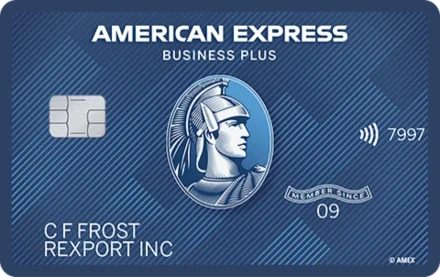
Amex Blue Business Plus
Welcome offer
15,000 pointsafter $3k in 3 months · ~$300
Annual fee
$0
Headline rate
2x points on everythingfirst $50,000/yr, then 1x
Realistic approval
Month 9–12from the day your first card reports
Foreign fee
2.7%on every non-USD charge
What it earns, in full
2xon every purchase — no categories, no enrolment, no
quarterly activation
1xon spend above the annual cap
2x runs to $50,000 per calendar year, roughly $4,150 a month,
then everything drops to 1x.
Why we picked it. 2x transferable points on literally every
purchase, with no annual fee and no categories to think about. Its
real job is opening your Membership Rewards account early, so that
when Business Gold or Business Platinum lands a year later the
points pool into one balance.
Pros and cons
Pros
2x points on all spending up to $50,000 a year, no
categories to track
No annual fee at all
Opens a Membership Rewards balance for later Gold/Platinum
transfers
Easiest Amex approval for a founder with a short US file
Cons
Small welcome offer compared to the paid Amex cards
Drops to 1x above the $50,000 annual cap
Still needs an existing US tradeline reporting clean
Amex acceptance is thinner than Visa/Mastercard outside
the US
4.5/ 5
Best flat cash back
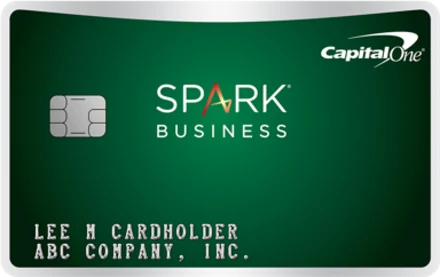
Capital One Spark Cash Plus
Welcome offer
$2,000 cash backafter $30k in 3 months
Annual fee
$150refunded every year you spend $150k
Headline rate
2% flat on everything5% on hotels & cars via Capital One Travel
Realistic approval
Month 12+from the day your first card reports
Foreign fee
None
What it earns, in full
2%cash back on every purchase, with no categories and no
cap
5%on hotels and rental cars booked through Capital One
Travel
No earning caps at all. The $150 annual fee is refunded in full
every year you spend $150,000 or more.
Why we picked it. For a founder who is never going to
redeem points for business class, this is the whole strategy in
one card: 2% on everything, no preset spending limit, and an
annual fee that refunds itself at $150,000 of spend. On $200,000
of yearly spend it returns $4,000 with an effectively free card.
Pros and cons
Pros
Flat 2% on every purchase with no categories and no caps
$150 annual fee is refunded in full at $150,000 of annual
spend
No preset spending limit — useful for lumpy ad or
contractor spend
$2,000 welcome offer in plain cash, no points valuation
games
Cons
Charge card: the full balance is due every month
$30,000 in three months is a heavy spend requirement
Cash back only — nothing transfers to airlines
Needs a genuine 740+ file, so month 12 at the earliest
4.5/ 5
Best personal premium card
Capital One Venture X
Welcome offer
75,000 milesafter $4k in 3 months · ~$1,500
Annual fee
$395≈$85 net after credits
Headline rate
2x miles on everything10x hotels · 5x flights via Capital One Travel
Realistic approval
Month 15+from the day your first card reports
Foreign fee
None
What it earns, in full
10xon hotels and rental cars booked through Capital One
Travel
5xon flights and vacation rentals booked through Capital One
Travel
2xmiles on every other purchase, uncapped
No cap on the 2x. A $300 annual credit for Capital One Travel
bookings plus 10,000 anniversary miles offsets roughly $400 of
the $395 fee — if you use the portal.
Why we picked it. The only premium personal card whose
credits genuinely cancel the fee: a $300 annual travel credit plus
10,000 anniversary miles leaves about $85 of real cost for
Priority Pass and Capital One Lounge access. For a founder who
flies but does not live in the Amex ecosystem, it is the sensible
premium pick.
Pros and cons
Pros
$300 travel credit and 10,000 anniversary miles cover most
of the fee
Priority Pass plus Capital One Lounges included
2x miles on everything with no categories
Transfers to 15+ partners including Flying Blue and
Avianca LifeMiles
Cons
Capital One's travel portal is weaker than Chase's or
Amex's
10xon Peloton equipment and accessories over $150, through
December 31, 2027
8xon everything booked through Chase Travel, including The
Edit hotels
5xon Lyft rides, through September 30, 2027
4xon flights and hotels booked directly with the airline or
hotel
3xon dining at restaurants worldwide
1xon everything else
No caps on any tier. Travel covered by the $300 credit earns no
points. Spend $75,000 in a calendar year and it adds IHG Diamond
Elite, Hyatt Explorist and Southwest A-List status on top.
Why we picked it. The personal twin of the card that leads
the business tab: the same 8x and 4x travel rates and the same
Sapphire Lounge and Priority Pass access, plus 3x on dining
anywhere in the world and Air Canada Maple Leaf lounges in Europe.
The $300 travel credit and $500 at The Edit hotels are easy to use
from abroad. The dining, StubHub, Apple TV, Lyft and Peloton
credits mostly need a US base. It costs $700 a year more than
Sapphire Preferred, so take it if you fly often enough to use the
lounges.
Pros and cons
Pros
4x on flights and hotels booked direct, 8x through Chase
Travel
3x on dining worldwide, not only at US restaurants
Sapphire Lounges, 1,300+ Priority Pass lounges and Air
Canada Maple Leaf lounges
$300 travel credit and $500 at The Edit hotels each year
Cons
$795 a year, plus $195 for each authorized user
Personal Chase underwriting and 5/24 put it at month 18 or
later
The dining, StubHub, Apple and Lyft credits are hard to use
from outside the US
Half the welcome offer of the business version, for the
same fee
4.4/ 5
Best for business class
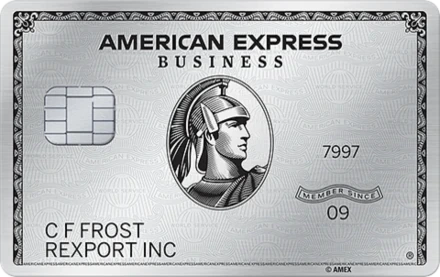
Amex Business Platinum
Welcome offer
Up to 300,000 pointsafter $20k in 3 months · ~$6,000
Annual fee
$695
Headline rate
5x on flights booked direct1.5x on purchases over $5,000 · 1x else
Realistic approval
Month 15+from the day your first card reports
Foreign fee
None
What it earns, in full
5xon flights and prepaid hotels booked through
amextravel.com
1.5xon eligible purchases of $5,000 or more — useful for agency
retainers and inventory
1xon everything else
The 1.5x tier runs to $2 million of qualifying large purchases
per calendar year. Most day-to-day spend earns 1x, so this is a
perks card rather than an earning card.
Why we picked it. The largest welcome offer available to a
non-resident founder, and the only card here whose perks are worth
real money before you spend a cent: Centurion and Priority Pass
access across 1,550+ lounges, a $200 airline fee credit and a $189
CLEAR credit. If you fly transatlantic more than twice a year the
fee pays back; if you do not, it does not.
Pros and cons
Pros
The biggest welcome offer on this page, worth roughly
$6,000 in transfers
Centurion Lounge plus Priority Pass — 1,550+ lounges
worldwide
$200 airline fee credit and $189 CLEAR credit each year
5x on flights, and 1.5x on any single purchase over $5,000
Cons
$695 a year is real money if you do not actually fly
business class
$20,000 of spend in three months to earn the offer
1x on most everyday spend — it is a perks card, not an
earn card
Overkill before month 15; Ink Preferred does more for $95
4.4/ 5
Best personal travel card
Capital One Venture Rewards
Welcome offer
75,000 milesafter $4k in 3 months · ~$1,500
Annual fee
$95
Headline rate
2x miles on every purchase5x hotels & rental cars via Capital One Travel
Realistic approval
Month 12+from the day your first card reports
Foreign fee
None
What it earns, in full
5xon hotels and rental cars booked through Capital One
Travel
2xmiles on every other purchase, uncapped
No caps. Includes up to $120 in credit toward Global Entry or
TSA PreCheck every four years.
Why we picked it. 2x miles on everything, a $1,500 welcome
offer, and the same transfer partners as Venture X for $300 less a
year. For a founder whose personal spend is ordinary and whose
travel is occasional, this is where the personal side of the
wallet should start after the secured cards graduate.
Pros and cons
Pros
Reachable on an ITIN roughly three months before Chase or
Amex personal cards
2x miles on every purchase, no categories to manage
Transfers to 15+ airline and hotel partners
Up to $120 credit toward Global Entry or TSA PreCheck
Cons
No lounge access at this tier
2x is beaten by a good business card on category spend
Capital One's portfolio cap means it competes with Venture
X for a slot
Miles are worth less than Ultimate Rewards on most
redemptions
4.3/ 5
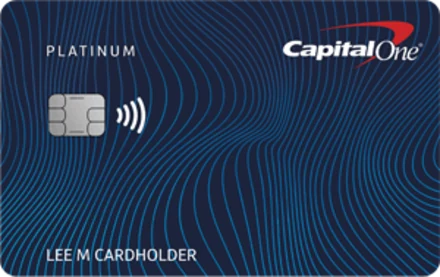
Best first card from zero
Capital One Platinum Secured
Welcome offer
Nonethis card's job is the credit file
Annual fee
$0$49 / $99 / $200 refundable deposit
Headline rate
No rewardsyou are buying a payment history, not points
Realistic approval
Month 0from the day your first card reports
Foreign fee
None
What it earns, in full
0xno rewards of any kind — this card buys you a payment
history, not points
There is nothing to optimise here. Put a single small recurring
charge on it, autopay it in full, and leave it alone for six
months.
Why we picked it. The $49 minimum deposit is the lowest in
the market, Capital One is the most ITIN-friendly major issuer,
and it graduates to unsecured cleanly in 6 to 12 months. Every
founder we work with opens this on day one of their US setup,
because nothing else on this page approves before it reports.
Pros and cons
Pros
$49 minimum deposit — the lowest of any secured card
Approves with an ITIN and a completely empty US credit
file
Reports to all three personal bureaus from month one
Graduates to unsecured in 6–12 months and returns your
deposit
Cons
No rewards of any kind
Starting limit is usually $200–$1,000
Personal card, so it does not build a business credit file
You are locking up a deposit for the better part of a year
4.2/ 5
Best mid-tier travel card
Capital One Venture X Business
Welcome offer
150,000 milesafter $30k in 6 months · ~$3,000
Annual fee
$395
Headline rate
2x miles on everything10x hotels · 5x flights via Capital One Travel
Realistic approval
Month 12+from the day your first card reports
Foreign fee
None
What it earns, in full
10xon hotels and rental cars booked through Capital One
Travel
5xon flights and vacation rentals booked through Capital One
Travel
2xmiles on every other purchase, uncapped
No cap on the 2x. The 10x and 5x rates only apply inside Capital
One's own travel portal.
Why we picked it. Lounge access and 2x on everything for
$300 less than the Amex Business Platinum, with a $300 annual
travel credit and 10,000 anniversary miles that cover most of the
fee. Miles transfer to 15+ airline partners including Flying Blue,
Avios and Turkish.
Pros and cons
Pros
2x miles on every purchase, with no categories to manage
Priority Pass and Capital One Lounge access included
$300 annual travel credit plus 10,000 anniversary miles
Transfers to 15+ partners including Flying Blue and
Avianca LifeMiles
Cons
The Capital One travel portal is weaker than Chase's or
Amex's
$30,000 over six months to earn the welcome offer
Redundant if you already carry an Amex Platinum for
lounges
Fewer premium transfer sweet spots than Ultimate Rewards
4.1/ 5
Best for dining
American Express Gold Card
Welcome offer
Up to 100,000 pointsafter $6k in 6 months · ~$2,000
Annual fee
$325
Headline rate
4x at restaurants worldwide4x at US supermarkets ($25k/yr) · 3x on flights
Realistic approval
Month 15+from the day your first card reports
Foreign fee
None
What it earns, in full
4xat restaurants worldwide — the one premium benefit that
still works from Europe
4xat US supermarkets
3xon flights booked directly with airlines or through
amextravel.com
2xon prepaid hotels and other eligible travel booked through
amextravel.com
1xon everything else
4x dining caps at $50,000 per calendar year and 4x US
supermarkets at $25,000, both then dropping to 1x. The $120 Uber
Cash, $100 Resy and $84 Dunkin' credits are US-only, so discount
them entirely if you are not in the States.
Why we picked it. 4x at restaurants applies worldwide, not
just in the US, which is the one premium personal card benefit
that survives being based in Europe. The credits do not: most are
tied to US brands, so score this card on the 4x dining alone and
treat everything else as a bonus.
Pros and cons
Pros
4x at restaurants anywhere in the world, not only the US
4x at US supermarkets if you spend time stateside
Points pool with any Amex business card you already hold
Welcome offer worth roughly $2,000 through transfer
partners
Cons
The $325 fee is offset by credits that are almost all
US-brand-locked
4x supermarkets is worthless if you live in Europe
Personal Amex approval needs Nova Credit, Global Card
Access or a real US file
Charge card — pay in full every month
4.0/ 5
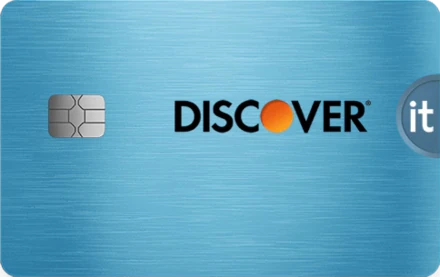
Best second tradeline
Discover it Secured
Welcome offer
Cashback Matchevery dollar earned in year one, doubled
Annual fee
$0$200 refundable deposit
Headline rate
2% at gas & restaurantsfirst $1,000 per quarter · 1% everywhere else
Realistic approval
Month 0from the day your first card reports
Foreign fee
None
What it earns, in full
2%at gas stations and restaurants
1%on everything else
×2Cashback Match — Discover doubles every dollar of cash back
you earn in your first year
The 2% covers the first $1,000 of combined gas and restaurant
spend each quarter, then drops to 1%.
Why we picked it. Two tradelines reporting build a file
measurably faster than one, and this is the best second one: it
pays rewards while it is still secured, and the automatic
month-seven review means the deposit comes back without another
hard pull.
Pros and cons
Pros
Automatic unsecured review at month seven — no new
application
Cashback Match doubles everything you earn in the first
year
No annual fee and a $200 deposit
Reports to all three personal bureaus
Cons
Discover acceptance is poor outside the United States
2% category caps at $1,000 per quarter
Personal card — no business credit file built
Low starting limit tied to your deposit
4.0/ 5
Best flat rate at $0
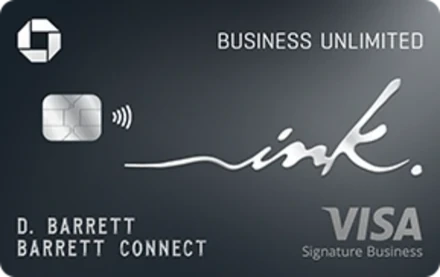
Chase Ink Business Unlimited
Welcome offer
$750 cash backafter $6k in 3 months
Annual fee
$0
Headline rate
1.5% flat on everythingno categories, no caps
Realistic approval
Month 9–12from the day your first card reports
Foreign fee
3%on every non-USD charge
What it earns, in full
1.5%on every purchase — no categories, no caps, nothing to
track
No caps and no bonus categories. It exists to catch everything
the Ink Cash's 5% and 2% tiers miss.
Why we picked it. The card you put everything that earns 1%
elsewhere on. Same $750 offer as the Ink Cash with no categories
to think about, and if you hold an Ink Preferred the rewards
graduate into transferable points.
Pros and cons
Pros
1.5% on every purchase with no category tracking
$750 welcome offer with no annual fee
Rewards become transferable points when paired with Ink
Preferred
No caps on the earn rate
Cons
1.5% is beaten by Spark Cash Plus's flat 2%
Chase 5/24 and a 6–12 month file requirement still apply
No travel perks or credits
Overlaps heavily with Ink Cash — most founders need only
one
4.0/ 5
Best personal card with no fee
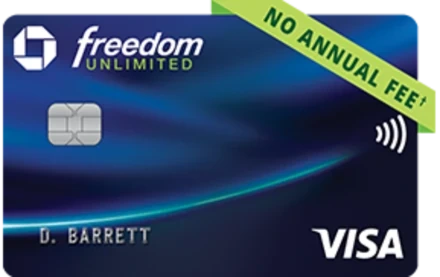
Chase Freedom Unlimited
Welcome offer
$200 cash backafter $500 in 3 months
Annual fee
$0
Headline rate
1.5% on everything5% travel via Chase Travel · 3% dining &
drugstores
Realistic approval
Month 12+from the day your first card reports
Foreign fee
3%on every non-USD charge
What it earns, in full
5%on travel purchased through Chase Travel
3%on dining, including takeaway and delivery
3%at drugstores
1.5%on every other purchase
No caps on any tier. Pair it with a Sapphire or Ink Preferred
and the cash back converts into transferable Ultimate Rewards.
Why we picked it. The cheapest way to keep a Chase personal
tradeline aging for free, and its cash back converts into
transferable Ultimate Rewards the moment you also hold a Sapphire
or Ink Preferred. Low welcome offer, but a $0 card you never close
is worth more to a young file than the offer is.
Pros and cons
Pros
No annual fee, so you keep it open forever and age your
file
Rewards convert to transferable points if paired with
Sapphire or Ink Preferred
3% on dining and drugstores on top of 1.5% everywhere
Very low $500 spend requirement for the welcome offer
Cons
It consumes a 5/24 slot — open it after your Chase
business cards
Small $200 welcome offer
1.5% base rate is beaten by several business cards here
No travel protections or credits
3.9/ 5
Best first unsecured business card
Capital One Spark Cash Select
Welcome offer
$500 cash backafter $4,500 in 3 months
Annual fee
$0
Headline rate
1.5% flat on everything5% on hotels & cars via Capital One Travel
Realistic approval
Month 6–9from the day your first card reports
Foreign fee
None
What it earns, in full
1.5%cash back on every purchase, uncapped
5%on hotels and rental cars booked through Capital One
Travel
No cap on the 1.5%. The 5% is portal-only.
Why we picked it. The first card most founders get approved
for that is not secured. It is not the best earner on this page
and it is not trying to be — it exists to convert six months of
secured payment history into a real unsecured business tradeline
with a $2,000–$5,000 limit.
Pros and cons
Pros
Realistic approval at month six, earlier than any Chase or
Amex product
ITIN accepted without an SSN
No annual fee and a genuine business tradeline
$500 welcome offer at a low $4,500 spend requirement
Cons
1.5% flat is beaten by Ink Cash's 5% categories
Starting limits are modest at $2,000–$5,000
Capital One's 2-in-30 rule limits how you use application
slots
No transferable-points upside
3.9/ 5
Best personal lounge access
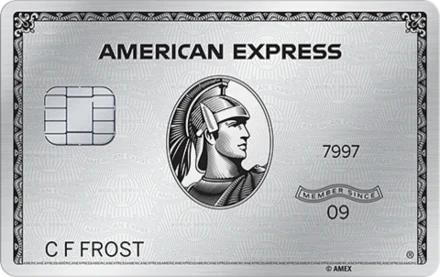
The Platinum Card from Amex
Welcome offer
Up to 175,000 pointswelcome offers vary by application route
Annual fee
$895
Headline rate
5x on flights booked direct5x on prepaid hotels via Amex Travel · 1x else
Realistic approval
Month 18+from the day your first card reports
Foreign fee
None
What it earns, in full
5xon flights booked directly with airlines or through
amextravel.com
5xon prepaid hotels booked through amextravel.com
1xon everything else
5x on flights runs to $500,000 per calendar year. Everything
outside travel earns 1x — the case for this card is the lounge
network and the credits, not the earn rate, and most of those
credits are locked to US brands.
Why we picked it. The widest lounge network in the world
and Fine Hotels + Resorts benefits that work everywhere. Be honest
about the fee though: the airline fee credit is locked to one US
carrier and most of the other credits are US-brand-specific, so a
Europe-based founder recovers far less of the $895 than the
marketing implies.
Pros and cons
Pros
Centurion, Delta Sky Club and Priority Pass — the widest
lounge network available
Fine Hotels + Resorts benefits apply at properties
worldwide
5x on flights booked directly with airlines
Membership Rewards transfer to Flying Blue, ANA, Avios and
LifeMiles
Cons
$895 a year, and most offsetting credits are locked to US
brands
Airline fee credit works with one selected US carrier only
1x on everything outside travel — a perks card, not an
earning card
Month 18 at the earliest, and only with a genuinely built
file
3.8/ 5
Best first business tradeline
BoA Business Advantage Secured
Welcome offer
Nonethe business credit file is the payoff
Annual fee
$0$1,000 refundable deposit
Headline rate
1.5% flat on everythingeven while the card is secured
Realistic approval
Month 0–3from the day your first card reports
Foreign fee
3%on every non-USD charge
What it earns, in full
1.5%cash back on every purchase, uncapped — unusual for a
secured card
No caps. Preferred Rewards for Business members earn 25%–75%
more, but that tier needs $20,000+ held in Bank of America
business accounts.
Why we picked it. One of the very few secured cards that
builds a business credit file, not just a personal one. It reports
to three personal bureaus and two business bureaus, which means
your LLC starts accruing its own history at the same time you are
building your FICO.
Pros and cons
Pros
Reports to two business bureaus as well as all three
personal ones
1.5% cash back while still secured — rare for a secured
card
No annual fee
Graduation review after 12 months of on-time payments
Cons
$1,000 deposit locked up, versus $49 for Capital One
Onboarding friction for founders without a US presence
12 months before a graduation review, not 6
No welcome offer at all
3.8/ 5
Best second Capital One tradeline
Capital One Quicksilver Secured
Welcome offer
Nonea third tradeline is the payoff
Annual fee
$0$200 refundable deposit
Headline rate
1.5% flat on everything5% on hotels & cars via Capital One Travel
Realistic approval
Month 3from the day your first card reports
Foreign fee
None
What it earns, in full
1.5%cash back on every purchase, uncapped — while the card is
still secured
5%on hotels and rental cars booked through Capital One
Travel
No caps. Earning anything at all on a secured card is the point;
the rate is secondary.
Why we picked it. The same secured mechanics as the
Platinum Secured but with 1.5% cash back attached, which makes it
the obvious month-three addition. Two Capital One tradelines also
build the internal relationship that makes the Spark approval at
month six far more likely.
Pros and cons
Pros
Earns 1.5% cash back while still secured
Builds a second Capital One relationship before you apply
for Spark
No annual fee, refundable deposit
Graduates to unsecured with on-time payments
Cons
$200 deposit versus $49 for the Platinum Secured
Personal card, so no business credit file
Low limit until it graduates
No welcome offer
3.5/ 5
Best for large single purchases
Chase Ink Business Premier
Welcome offer
100,000 pointsafter $10k in 3 months · ~$1,000
Annual fee
$195
Headline rate
2.5% on purchases over $5,0002% on everything else
Realistic approval
Month 15+from the day your first card reports
Foreign fee
None
What it earns, in full
2.5%cash back on every purchase of $5,000 or more
2%cash back on everything else
No caps on either tier. The rewards are cash back only — they do
not convert to transferable Ultimate Rewards, even if you hold
an Ink Preferred.
Why we picked it. The only card here that pays a premium
specifically for big-ticket spending — 2.5% on anything over
$5,000, which suits founders paying agencies, contractors or
inventory in large lumps. The catch is that its points are
cash-back only, so there is no transfer upside.
Pros and cons
Pros
2.5% on every single purchase above $5,000
2% flat on everything else, beating most flat-rate cards
No preset spending limit for lumpy business spend
Flex for Business lets you pay large purchases over time
Cons
Points are cash-back only — they do not transfer to
airlines
$195 annual fee with no travel credits to offset it
Balance is due in full each month
Latest-stage Chase approval, month 15 at the earliest
3.4/ 5
Best with no credit file at all
Brex Card
Welcome offer
Signup credits varysoftware credits, not points
Annual fee
$0
Headline rate
Tiered Brex pointson rideshare, travel, restaurants and software
Realistic approval
Month 0from the day your first card reports
Foreign fee
Up to 3%FX markup on non-USD charges
What it earns, in full
8xon rideshare
5xon travel booked through Brex Travel
4xat restaurants
3xon eligible Apple products and recurring software
subscriptions
1xon everything else
The multipliers above apply on the daily-repayment plan;
switching to monthly repayment drops the card to a flat 1x. Brex
revises its rewards tiers far more often than the banks do, so
check the current table before you plan around it.
Why we picked it. For a funded LLC with an empty personal
credit file, this is the fastest route to a usable US card. Treat
it as spend infrastructure rather than a rung on the ladder: it
solves the payment problem immediately, but it will not build the
personal FICO that Chase and Amex will eventually ask for.
Pros and cons
Pros
No SSN, no personal credit check, no deposit
Approves in month zero on business cash flow alone
No annual fee and generous per-user card issuing
Strong spend controls and accounting integrations
Cons
Does not build a personal FICO file — the thing you
actually need
Requires meaningful cash in a US business account
Balance is swept and paid automatically, often daily or
monthly
Rewards program is weaker than Amex or Chase
No cards match that combination. Try another filter.
Compare every card side by side
Same filters and sorting as above. Tap a column heading to sort by it,
or a card name to jump to the full write-up.
Three answers, no email address. This is the same triage we run on a
strategy call, minus the part where we look at your actual file.
Your next applications, in order
How we rate cards
Every other roundup scores a card on its rewards and its perks, because
it assumes approval is a formality. For a founder with an ITIN and a
six-month-old credit file, approval is the whole problem — so
it carries the most weight here.
35%Approval reality
Does the issuer accept an ITIN in place of an SSN, and how many
months of reporting history does it want first? A perfect card
you cannot get scores zero.
25%Welcome offer
Value at realistic redemption rates, weighed against the spend
required to earn it. A 300,000-point offer behind $20,000 of
spend is not worth more than a $750 offer behind $6,000 for
everyone.
20%Earn rate on founder spend
Scored on what founders actually buy — ads, software,
contractors, flights — not on US supermarkets and gas stations
you will never use from Lisbon or Warsaw.
15%Fee versus what comes back
The break-even spend, in plain numbers. Credits that only work
with US brands are discounted, because most of our readers
cannot use them.
5%Points flexibility
Whether the currency transfers to the programs that matter for
Europe-to-Americas travel — Flying Blue, Aeroplan, Avios, ANA,
Avianca LifeMiles — or dies as statement credit.
Business or personal — which comes first?
Personal first, then business. Not because personal cards are better,
but because a business card is still underwritten against you — and with
an ITIN and an empty file there is nothing for the issuer to read.
Almost every founder we work with opens a personal secured card, lets it
report for six months, and applies for the first business card on the
back of that history.
A personal secured card is the only thing that approves against an
empty file.
You post a $49–$200 deposit, the issuer takes no risk, and the account
reports to all three bureaus every month from day one. That is the
only tradeline that exists at month zero, and everything after it is
bought with that payment history.
Business cards read your personal file too.
You sign as a personal guarantor, so Chase, Amex and Capital One pull
your consumer report on a business application. Applying at month one
with a thin file is not impossible — it is just a hard pull spent on a
likely denial. Six months of on-time secured history turns the same
application into a routine approval.
Once the file exists, business cards do the heavy lifting.
The LLC's bank balance, deposits and transaction history are read
alongside your personal profile, so limits start at $3,000–$10,000
against $500–$1,000 for a personal starter, and business charge cards
have no preset limit at all.
Most business cards do not report to your personal bureaus.
Chase, Amex and Capital One business cards generally report only on
default, which means a $40,000 month of ad spend does not wreck your
personal utilization ratio the way the same spend on a personal card
would.
Keep your 5/24 slots for the cards that need them.
Every personal card counts toward Chase's 5/24 rule, including your
secured starters; Ink business cards do not. Open two secured cards to
get the file born, then move to business — stack extra personal cards
like a Freedom Unlimited or a Sapphire early and you can lock yourself
out of the entire Ink line for two years.
Premium personal cards come last.
Sapphire Preferred and Amex Gold want a seasoned file and a FICO above
740. Personal secured at month 0, business from month 6, premium
personal around month 15.
The application rules that get founders auto-denied
Each issuer enforces an unwritten limit on how often you can apply.
Break one and you are declined regardless of your score, so the order
you apply in matters more than the cards you pick.
Issuer
Rule
What it means for you
Chase
5/24
Auto-denied if you opened five or more personal cards from any
issuer in the past 24 months. Ink business cards do not count
toward the total, but you must be under it to be approved for
them. Apply to Chase first.
American Express
1 per lifetime · 2 in 90 days
One welcome bonus per card per lifetime, and a maximum of two
Amex cards in any 90 days. Never apply during a weak offer — you
cannot rematch it later.
Capital One
2 in 30 days · ~3 cards total
Two applications per 30 days maximum, and a portfolio cap of
roughly three personal cards. The most ITIN-friendly issuer is
also the one with the fewest slots.
The practical cadence is one new card every three months, rotated across
issuers: Chase first because of 5/24, then Capital One because of the
portfolio cap, then Amex because the lifetime rule means you want
maximum bonuses rather than maximum cards. Each hard pull costs roughly
five FICO points and recovers within three to six months.
Frequently asked questions
Can a non-resident get a US credit card with an ITIN and no SSN?
Yes. Capital One, American Express and Discover all accept an ITIN
as an SSN substitute. What blocks most founders is not the ITIN, it
is the empty credit file behind it. You need an ITIN, a US bank
account, valid ID and a US mailing address, and then roughly six
months of a secured card reporting on time before an unsecured card
becomes realistic.
Which US credit card should a non-resident founder apply for first?
Capital One Platinum Secured. The $49 minimum deposit is the lowest
in the market, Capital One is the most ITIN-friendly major issuer,
and it graduates to unsecured cleanly in 6 to 12 months. Open
Discover it Secured alongside it if you can spare another $200,
because two tradelines reporting build a file measurably faster than
one.
Should I get a business card or a personal card first?
A personal secured card first, because it is the only thing that
approves with an empty file — then business cards from month six.
Business cards are underwritten against your LLC's banking history
as well as your personal file, so they approve earlier, carry higher
limits, and generally keep large spending off your personal
utilization. Save premium personal cards like Sapphire Preferred or
the Amex Gold for month 15 and later.
What is the best US business credit card with no annual fee?
Chase Ink Business Cash. It pays 5% back on office supplies and
internet, phone and cable on the first $25,000 a year, carries a
$750 welcome offer after $6,000 of spend in three months, and
charges no annual fee. If Chase is out of reach because of 5/24 or a
thin file, Amex Blue Business Plus at 2x points on everything is the
fallback.
How long does it take a non-resident founder to qualify for premium
cards?
Twelve to eighteen months if you do not skip steps. Months 0 to 6
are secured cards. Months 6 to 12 are the first unsecured business
cards at a FICO around 680 to 720. From month 12, with a FICO above
740, premium cards like Amex Business Gold and Chase Ink Business
Preferred come into range, and that is where welcome offers worth
$2,000 to $6,000 start.
Does the Chase 5/24 rule apply to non-residents?
Yes, it applies to everyone. Chase auto-denies any application if
you have opened five or more personal credit cards from any issuer
in the past 24 months. Chase business cards do not count toward the
total, but you still have to be under it to be approved for them,
which is why Chase applications go first and Amex and Capital One
follow.
Is a premium card with a $375 or $695 annual fee worth it?
It depends on spend, not on status. Amex Business Gold at $375 a
year breaks even at roughly $2,500 a month of spend in its 4x
categories. Amex Business Platinum at $695 only pays back if you
genuinely use the lounge access, the $200 airline credit and the
$189 CLEAR credit. If you do not fly, take Chase Ink Business
Preferred at $95 instead and put the difference toward a ticket.
Which of these can you actually get?
The ranking above is generic. Your file is not. Tell us where you are
— LLC, EIN, ITIN, banking, months of history — and we will tell you
which cards are in range now and which are twelve months out.
Disclaimer: This page is educational and reflects our
own experience helping European founders access the US financial system.
It is not legal, tax or financial advice, and it is not an offer of
credit. Welcome offers, annual fees, earning rates and approval criteria
change frequently and vary by applicant; every figure here was checked
against public issuer terms in September 2026, and you should confirm
current terms with the issuer before you apply. Card images, product
names and marks belong to their respective issuers and appear here for
identification only; Founders Credit is not affiliated with or endorsed
by any card issuer named on this page.